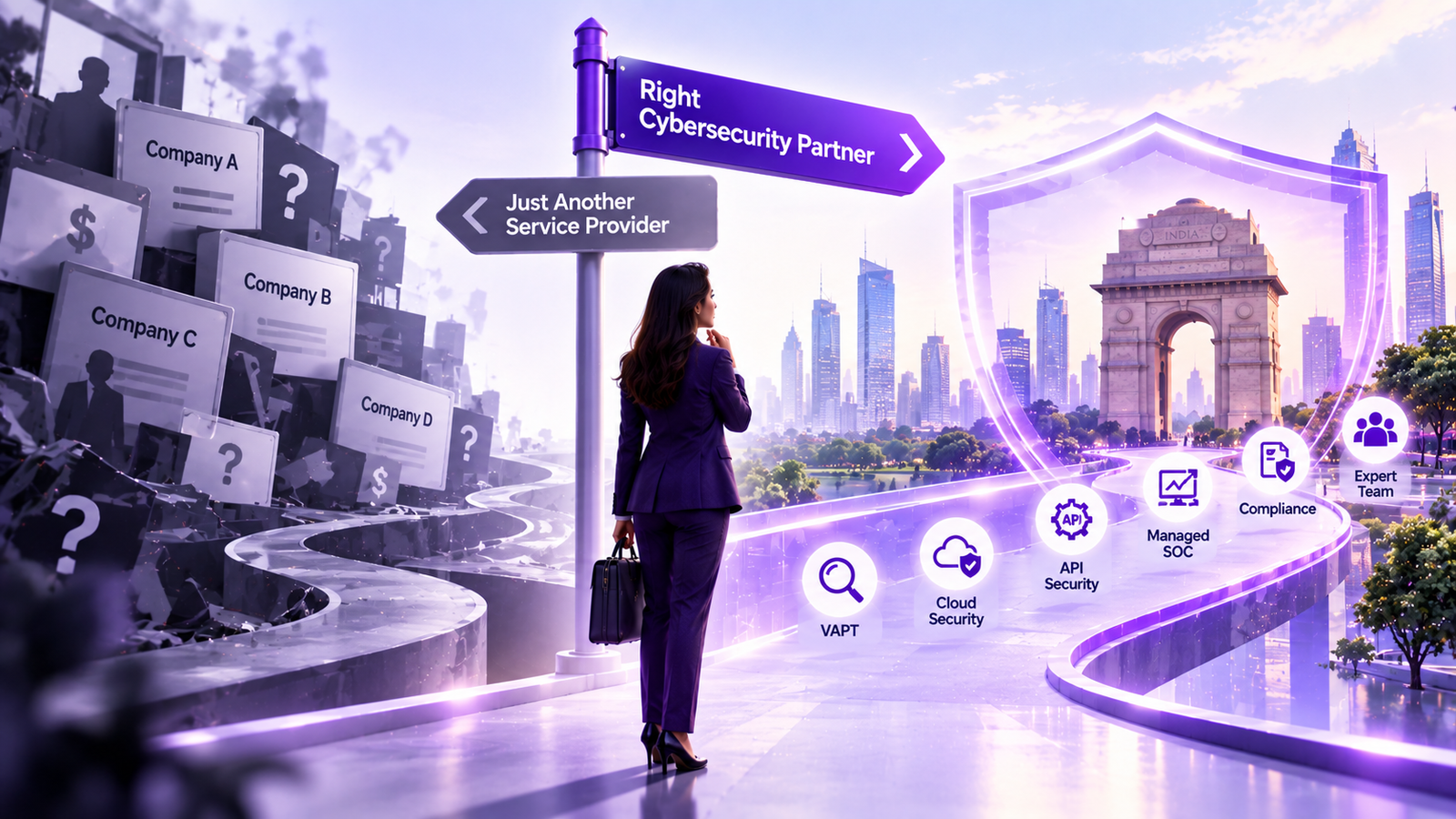
Finding the right cybersecurity solutions company in India isn’t as simple as picking a name off a list. Everyone claims to offer the same set of services—VAPT, SOC, cloud security, compliance audits, the works. What you really need, though, is a team that gets your actual business risks, understands your tech stack, knows the rules you operate under, and can help you avoid expensive mistakes now and in the long run.
A good security provider sits down with you and breaks down your reality: What can fall apart? How will it hurt if it does? What needs fixing first? This guide is all about helping you dig deeper: what to look for in a cybersecurity partner, which services matter most, common red flags to avoid, and how to focus on real expertise over sticker price.
Key Takeaways
- The cheapest option won’t always protect you when it counts.
- Choose what you actually need based on your business exposure and risks.
- Services like VAPT, app security, API testing, and SOC address different, often overlooked problems.
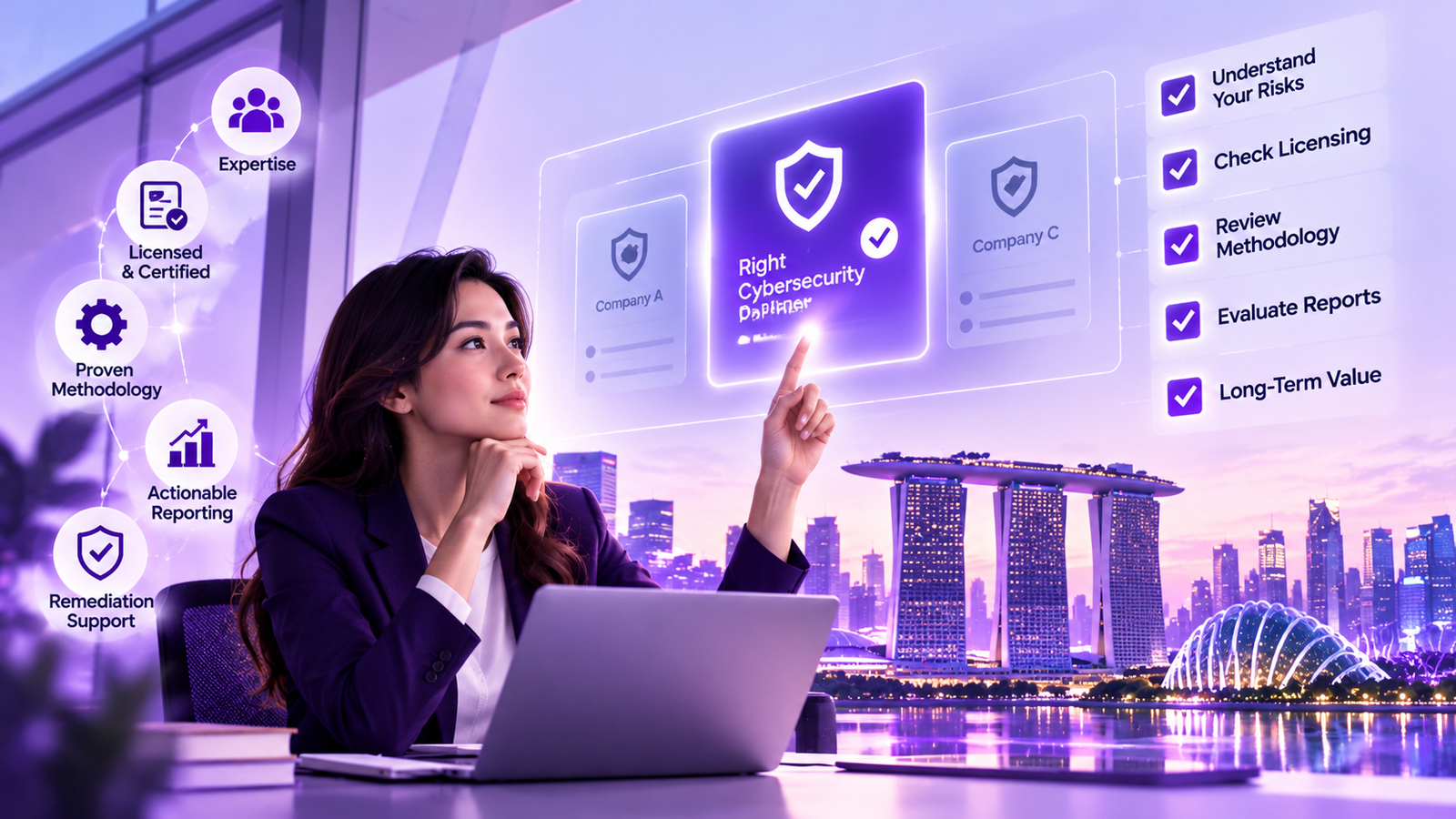
- Look at expertise, methodology, reporting, remediation help, and compliance know-how.
- Independent assessments lead to much smarter security investments.
Why You Can’t Ignore Cybersecurity in India
Tech has completely changed the way Indian businesses run. More cloud, more digital payments, and more online operations are fantastic for growth, but they also create a much bigger target for attacks. You are probably juggling a stack of websites, apps, APIs, cloud assets, employee laptops, and vendor connections. One hole in the fence, and someone can sneak in where you didn’t expect.
It’s not just about keeping the bad guys out. Keeping up with India's rules keeps getting tougher. CERT-In’s guidelines now demand better incident reporting, log management, and timekeeping. In 2025, they even released formal security audit policies to spell out exactly what solid cyber audits need to look like. The bottom line: your security has to mix real-world risk management, compliance smarts, and constant rechecking.
What to Expect from Cybersecurity Solutions Companies in India
There is no “one size fits all” here. What works for a tech startup won’t cut it for a bank or a logistics firm. Match your needs to what you are really trying to protect:
Finds weak spots in websites, mobile apps, networks, and cloud setups, then rigorously tests whether they can be exploited by real-world attackers.
Checks the glue between customers and apps for broken object-level authentication, overexposed data, and sneaky business logic flaws.
Spots over-permissioned IAM roles, publicly exposed storage buckets, missing audit logs, and insecure firewall rules before they can blow up.
Delivers 24/7/365 continuous threat detection, telemetry analysis, and rapid incident response across your endpoints, cloud, and hybrid networks.
Identifies internal gaps that could cause the highest financial loss while reviewing vendors and digital partners who could introduce unseen vulnerabilities.
Helps you satisfy national compliance directives, build enforceable Information Security Management Systems, and achieve audit-readiness.
How to Actually Judge Cybersecurity Companies
Don’t just stare at a long menu of services. You must dig much deeper.
Ask who is actually doing the work and what their credentials are. Do they really know your industry? Is there any real manual testing, or is it all just automated scans? Can they break down findings so leaders actually know what matters? Ultimately, the people and their process matter far more than the number of tools they use.
Understand Their Methodology and What Most Overlook
Before you sign up for an assessment, ask them to show their cards. What will they test? What won’t they touch? How do they rank risks? Does their report translate “tech talk” into business risk? CERT-In is now watching audit quality closely, expecting auditors to build solid evidence, tie everything to business impact, and verify compliance.
A lot of people get fixated on price and the raw number of vulnerabilities found. That doesn’t tell the full story. A dump of 150 minor issues isn’t better than a list of 40 if the small list includes serious, business-threatening gaps. You really want this chain:
This clear chain makes security actionable, not just a stack of scary IT jargon.
What Solution Does Your Business Really Need?
You don’t need to buy every single service, just the ones that protect what matters most:
- Public-facing website? Start with web app security testing and VAPT.
- Rely heavily on APIs? API security testing is absolutely non-negotiable.
- Most stuff in the cloud? It is time for a thorough cloud assessment.
- Need 24/7 threat detection? SOC services make the most sense.
- Management in the dark about risk? Start with a cybersecurity risk assessment.
- Depend on third-party tech? Evaluate those specific partners.
- Regulated industry? Pair technical checks with compliance assessments.
A 5-Step Framework and Practical Buyer’s Checklist
Use this 5-step framework to pick your cybersecurity partner:
- List your critical tech assets: Identify every server, web portal, API endpoint, and cloud repository in your operational perimeter.
- Work out impact severity: Determine which assets would cause catastrophic financial, operational, or legal damage if compromised.
- Match services to those risks: Align specific tests (e.g. penetration testing or SOC) directly to those vulnerabilities instead of buying generalized bundles.
- Compare providers on expertise: Evaluate their real-world methodologies, manual exploit capabilities, and remediation support.
- Check future scalability: Ensure the partner is prepared to evolve alongside your cloud architectures and compliance demands.
Buyer’s Practical Readiness Checklist
Before you commit, go beyond quotes and ask these critical questions:
- Do they understand our industry, and are the testers certified and experienced?
- Is there hands-on manual validation or just automated scan results?
- Will I get clear, actionable reports and help to fix what they find?
- Do they offer retesting and enforce strict NDAs and secure data handling?
- Are they ready for complex cloud-native and API-driven environments?
How Lumiverse Solutions Tackles Cybersecurity
At Lumiverse Solutions, we don’t believe in treating every client the same. We look at your risk, your tech, and your regulations to help you focus on what truly makes a difference.
Our services range from classic VAPT and app security to full cloud, API, SOC, risk assessments, Red Team Attack Simulations, and compliance consulting. Our goal is to show you where your real risks are, help you prioritize, and help you strengthen as you grow—not just sell you a pile of services. Picking cybersecurity solutions in India should always be about measurable risk reduction.
Conclusion
The best cybersecurity solutions companies in India aren’t necessarily the ones with huge service catalogs or the lowest prices. The right partner understands your world, your business, tech stack, the rules you answer to, and what puts you at risk.
Before deciding, compare real technical know-how, the way they work, their ability to explain findings, the help they offer with fixes, and how they protect your sensitive info. CERT-In now wants solid, evidence-backed audits that make sense at the business level. The focus is shifting: it’s less about “How cheap can I get this?” and more about “Who will actually reduce my risks?”
If your team is shopping for cybersecurity providers, start with your riskiest systems. Lumiverse Solutions helps you spot where your real risks are and strengthen as you grow. Reach out today for a full security assessment to see where your investment goes furthest.
Get Strategic Guidance
If your organization is evaluating cybersecurity providers, start by identifying your highest-risk systems and the business impact of a potential compromise. A structured cybersecurity assessment can help you determine which services are actually required and where your security investment can deliver the greatest value.
Frequently Asked Questions (FAQs)
1. What do cybersecurity solutions companies in India actually do?
They offer comprehensive services like VAPT, web and API security testing, cloud security reviews, 24/7 SOC monitoring, risk assessments, and compliance consulting tailored to national regulations.
2. How do you pick the right cybersecurity company?
Look for deep expertise, industry-specific experience, solid methodology, clear reporting, hands-on support for fixing issues, compliance know-how, data protection, and future-ready service.
3. Is there a single most important cybersecurity service?
There is no single silver bullet. Start with a risk assessment—it helps you prioritize what comes first for your specific business.
4. Why does manual penetration testing matter so much?
Humans find logic problems, authorization slips, and multi-step attack paths that automated scanners miss. Some vulnerabilities only show up when a skilled analyst investigates business logic.
5. How often should businesses get assessed?
Aim for annual reviews, or whenever you roll out big new features or major infrastructure modifications. Regulations or contracts sometimes set the required pace too.