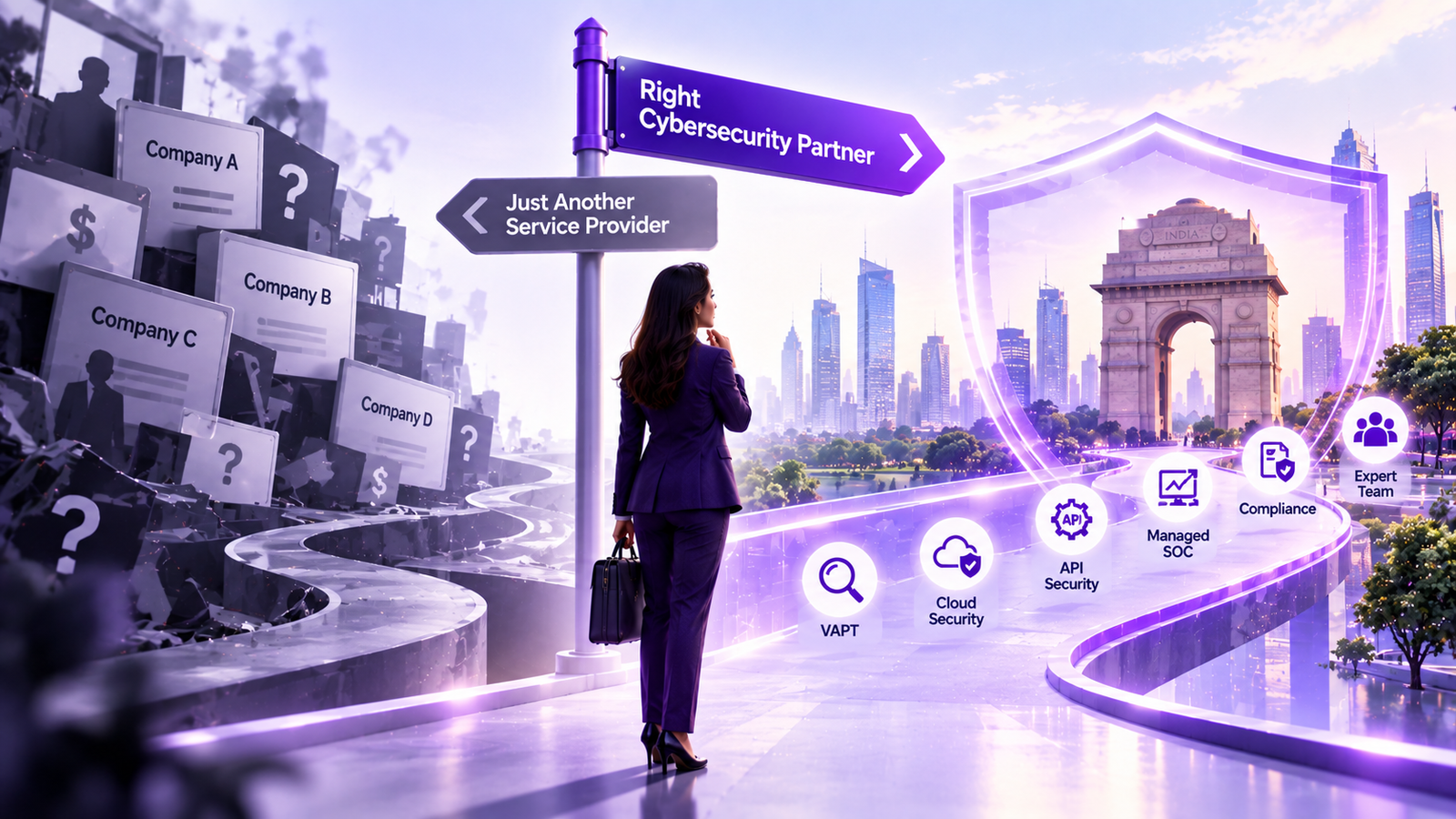
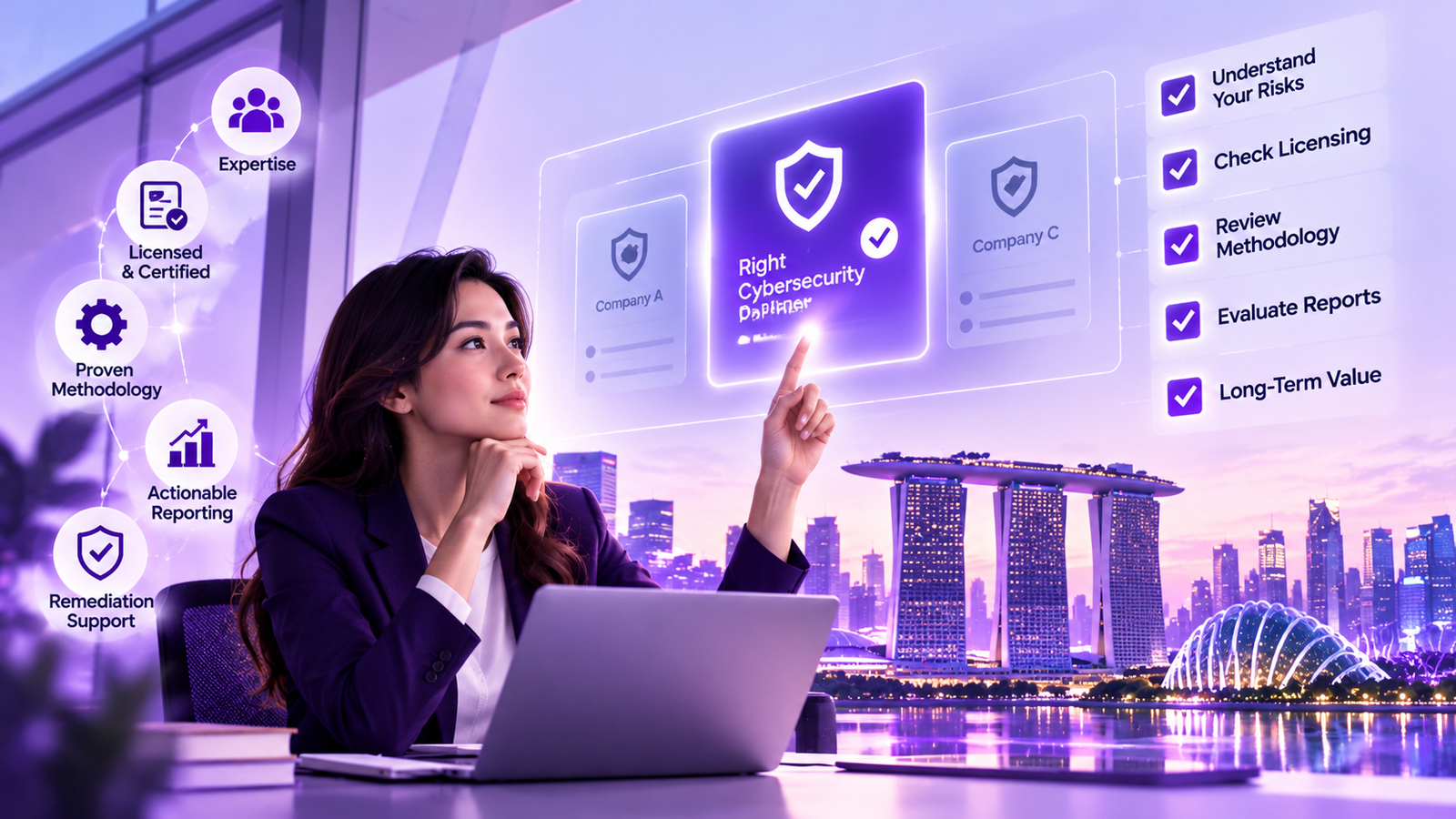
If you are shopping for a cybersecurity firm in Singapore, don’t just go for the lowest price or the company with the most service options. The best partner truly understands how your business runs, what tech you use, which regulations you need to follow, and what you actually need to protect.
This matters even more today, as Singapore’s cybersecurity scene gets increasingly complex. According to the Cyber Security Agency of Singapore (CSA), threats keep growing—ransomware, AI-driven attacks, wider attack surfaces, and supply chain connections are major headaches businesses face. On top of that, services like penetration testing and managed SOC monitoring require licenses under the Cybersecurity Act.
Before you sign anything, this guide breaks down how to pick the right cybersecurity company in Singapore to protect your business.
Key Takeaways
- Forget picking by price alone; focus on real business value.
- Choose a partner whose day-to-day expertise matches your specific risks.
- Check licensing if you are buying a regulated service in Singapore.
- Ask about testing methods, reporting quality, data protection, and post-assessment support.
Figure Out What Your Business Actually Needs
Don’t start by calling cybersecurity companies—first, nail down what you really expect them to do. Businesses vary a lot; one might need 24/7 monitoring while another mostly worries about web app vulnerabilities.
Here is how different operational goals line up with specific cybersecurity services:
Use a clear thought process: Identify which assets matter, determine the threats against them, and select the specific service that reduces those risks.
Check Real Expertise, Licensing, and Certifications
Lots of firms make big promises, but you must dig deeper. Do they really know your industry and your tech stack? Who will perform the work, and what credentials do they hold?
In Singapore, CSA requires licenses for penetration testing and managed SOC monitoring. As of 2026, CSA expects these providers to have the Cyber Trust Mark Promoter (Tier 3) certification. Always ask providers directly: Is this service licensable, and are you licensed? Never mistake general credentials for the specific regulated licenses you legally need.
Ask About Testing Methodology and Data Handling
A cybersecurity test should never be just an automated scanner dump. You need to know how the team tests and where the meaningful attack paths lie. CSA draws a hard line between vulnerability assessments (listing weaknesses) and penetration testing (actively attempting exploitation).
Key testing and data considerations:
- Manual Investigation: Look for manual investigation of authentication mechanisms, business logic flaws, and complex privilege escalation pathways that automated tools miss.
- Quality Over Quantity: Prioritize quality over quantity; focus on business impact rather than the total number of superficial automated scanner findings.
- Sensitive Data Protection: Verify how the provider protects your sensitive data, proprietary source code, and credentials during the assessment lifecycle.
- Encryption & Legal NDAs: Ensure strict end-to-end encryption, secure data transmission channels, and legally binding non-disclosure agreements are firmly in place.
Demand Actionable Reports and Post-Assessment Support
A super-technical report may look impressive, but it often leaves executive leadership confused. A usable report should feature an executive summary that makes business sense, clear risk prioritization, and technical details for engineers.
Finding vulnerabilities is only step one. Good partners help your team understand remediation, validate that issues are resolved, and schedule retesting. This transforms cybersecurity from a one-off project into continuous improvement.
Use a Business Value Lens Over Price Alone
Don’t just pick the cheapest quote. A long-term partner gets to know your systems, risk appetite, past issues, and compliance needs, leading to better future assessments.
Build a scoring matrix based on:
1. Tech Stack & Industry Alignment
Direct, verified experience securing your specific cloud environments, frameworks, and vertical regulations.
2. Singapore-Specific Licensing
Valid CSA licensing for penetration testing and SOC monitoring where legally required by Singapore law.
3. Methodology & Usable Reporting
Rigorous manual testing frameworks combined with executive-ready risk summaries and developer guides.
4. Remediation & Included Retesting
Hands-on engineer consultations during patch cycles and formal verification retests to confirm closure.
5. Strict Data Security Protocols
Ironclad data handling, zero-trust test infrastructure, encrypted communication, and strict NDAs.
6. Scalability & Long-Term Growth
Capacity to scale coverage effortlessly as your business expands across new regions, teams, and digital assets.
A 5-Step Selection Framework and Self-Check Checklist
Follow this simple roadmap to choose your provider:
- Define Your Risk: Identify critical systems, sensitive customer data, cloud resources, and third-party dependencies.
- Define Needed Services: Determine whether you need comprehensive VAPT, API testing, cloud security reviews, or 24/7 SOC monitoring.
- Shortlist Qualified Providers: Verify track records, practitioner credentials (OSCP, CISSP, CEH), and Singapore-specific licenses.
- Compare Deliverables: Review sample reports, post-test remediation support, and rigorous data management practices.
- Assess Long-Term Value: Select a partner capable of supporting ongoing security maturity rather than merely completing a compliance tick-box.
Quick Readiness Checklist:
- Are your security goals and scope clearly defined?
- Have you verified if your required services require CSA licensing?
- Does the provider's methodology include manual testing?
- Does the final report address business risks for executives?
- Is remediation support and retesting included?
How Lumiverse Solutions Can Help
Lumiverse Solutions helps organizations spot, prioritize, and tackle security risks effectively. Our services cover Vulnerability Assessment & Penetration Testing, Web and Mobile App Security Testing, API and Cloud Reviews, Cybersecurity Risk Assessments, Third-Party Risk Assessments, Red Team Engagements, SOC Monitoring, and Compliance Consulting.
When working with clients in Singapore, we begin by understanding your specific risk profile to deliver targeted services that address real threats. We emphasize actionable recommendations and clear guidance to help you build lasting resilience.
Conclusion
Picking a cybersecurity company in Singapore is much more than a numbers game. You need real expertise, robust testing methods, clear communication, proper reporting, trustworthy data handling, and reliable remediation help. Above all, make sure your provider checks all the right regulatory and licensing boxes.
A quality cybersecurity partner helps you make sense of your risks, test if your security works, and gives you a realistic path to better protection. Careful vendor evaluation upfront stops expensive mistakes and ensures you pay for real risk reduction. At Lumiverse Solutions, we help you spot, prioritize, and tackle security risks with tailored cybersecurity services. Reach out to our team today to build a safer future for your business.
Frequently Asked Questions (FAQs)
1. How do I choose a cybersecurity company in Singapore?
Look for deep technical expertise, industry experience, clear testing methods, proper CSA licensing, practical reporting, reliable remediation support, strong data protection, and long-term scalability.
2. Must a cybersecurity company be licensed in Singapore?
Only certain services require a license. The CSA currently regulates penetration testing and managed SOC monitoring services. You should always verify licensing requirements before hiring.
3. What should I ask before hiring a VAPT company?
Ask about their testing scope, manual versus automated methods, tester qualifications, report clarity, remediation guidance, retesting options, data protection policies, and required licensing credentials.
4. Is price the main factor when selecting a cybersecurity provider?
No. Price is only one factor. You should prioritize technical know-how, testing methodology, report usefulness, post-assessment remediation support, and regulatory compliance over cheap quotes.
5. Can an Indian cybersecurity company provide services for Singapore businesses?
Yes, but it depends on the service. Always verify whether the provider meets Singapore’s specific licensing and regulatory requirements for the exact services you need.