March 2025

Cybersecurity Myths Busted

Cybersecurity Myths Busted What You Really Need to Know

Cybersecurity Myths Busted What You Really Need to Know INTRODUCTION Cybersecurity is an essential part of our digital existence, but myths and misinformation tend to cause confusion on how to best secure our online lives. In this piece, we shall demystify common myths of cybersecurity and offer facts to keep you secure online. Our theme is Cybersecurity Myths Busted, and we shall make sure that after reading this guide, you are well aware of the reality surrounding cybersecurity. Myth 1: “Strong Passwords Are Enough to Keep You Safe” Cybersecurity Myths Debunked: Strong passwords are necessary, but they are not enough for complete security. The Reality A good cybersecurity approach involves multi-factor authentication (MFA), periodic password change, and the utilization of a password manager to refrain from credential reuse. How to Remain Safe Utilize different passwords for various accounts. Turn on multi-factor authentication (MFA). Make use of a password manager. Periodically change the password and steer clear of clichéd expressions. Myth 2: “Macs Are Invincible to Viruses” Myths in Cybersecurity Busted: Mac users are convinced that they are immune to malware and cyber attacks, but it is not true. The Reality Mac computers are less targeted than Windows systems, but they are not invincible to cyber attacks. Malware, ransomware, and phishing attacks continue to impact macOS users. How to Be Safe Get trustworthy antivirus software installed on your Mac. Keep macOS and apps up to date. Steer clear of fake downloads and phishing emails. Shun software from unknown sources for downloading. Myth 3: “Large Businesses Only are Hacked” Cyber Myths Shattered: Individuals, small businesses are equally vulnerable as large businesses when it comes to cyber attacks. The Reality Small businesses fall prey to hacker attacks since their security systems are not so good. Individuals face the risk of identity theft, data loss, and internet scamming too. Stay Secure Install basic cybersecurity protection, including firewalls and antivirus software. Train staff on phishing scams. Utilize secure cloud storage and encryption for sensitive information. Regular security audits to determine vulnerabilities. Myth 4: “Antivirus Software Is Never to Protect You” Cybersecurity Myths Demystified: Antivirus software is a must-have security layer but not a complete solution. The Truth Cyber threats change every day, and no antivirus software can prevent all of them. End-to-end security involves firewalls, intrusion detection systems, and user awareness training. How to Stay Safe Employ a mix of security solutions, such as a firewall and VPN. Update your operating system and software on a regular basis. Keep up with new cyber threats. Penetration testing to identify security vulnerabilities. Myth 5: “Public Wi-Fi Is Safe If It’s Password-Protected” Cybersecurity Myths Debunked: Even password-protected public Wi-Fi hotspots are not safe. The Truth Public Wi-Fi hotspots are susceptible to cyber attacks such as man-in-the-middle attacks, in which hackers steal data being transferred. How to Stay Safe Utilize a VPN (Virtual Private Network) when using public Wi-Fi. Don’t use online banking or fill out sensitive information on public networks. Only connect to secure and encrypted networks. Turn off automatic connection to public Wi-Fi on your devices. Myth 6: “Phishing Scams Are Easy to Identify” Cybersecurity Myths Debunked: Sophisticated phishing scams are capable of fooling even tech-literate users. The Truth Cybercriminals employ AI-based phishing attacks, social engineering, and deepfake technology to make extremely authentic emails, text messages, and phone calls. How to Stay Safe Always authenticate sender identities prior to opening links or downloading attachments. Turn on email filtering and anti-phishing features. Train employees and family members on phishing strategies. Beware of hasty or emotionally manipulative messages. Myth 7: “Incognito Mode Keeps You Anonymous” Cybersecurity Myths Debunked: Most people assume incognito or private browsing mode keeps all your online activity under wraps. The Truth Incognito mode does not stop your browser from saving history and cookies. Your ISP, employer, and websites may still be tracking you. How to Stay Safe Use a VPN for true anonymity. Disable third-party cookies and trackers. Think about privacy-oriented browsers like Brave or Tor. Use encrypted messaging apps to communicate securely. Myth 8: “Cybersecurity Is Only an IT Department’s Protection Responsibility” Cybersecurity Myths Debunked: Cybersecurity is everyone’s responsibility in an organization. The Reality One employee clicking on a phishing email can put an entire network at risk. Cybersecurity awareness and training must be prioritized by all. How to Be Safe Provide regular cybersecurity training to employees. Set strict security policies and guidelines. Use role-based access control (RBAC) to restrict data exposure. Promote a security-aware culture in the workplace. Conclusion Cybersecurity is not technology; it’s awareness and being proactive. Cybersecurity Myths Busted brings to light the myths that make people and businesses vulnerable. By dispelling these myths and following best practices, you can protect your online presence effectively. Cyber threats are constantly changing, so it’s important to stay current. Applying layered security controls, promoting cybersecurity awareness, and staying vigilant will ensure protection against threats. Cybersecurity is everyone’s responsibility, and awareness is the best way to minimize risk. Cybersecurity is a continuous process that involves learning and adjusting constantly. By questioning myths and adopting a proactive security mindset, you can substantially minimize risks and improve your safety online. Disclaimer The information provided in this article, “Cybersecurity Myths Busted: What You Really Need to Know,” is intended for general educational and informative purposes only. Although we make every effort to be accurate and deliver current information on best practices in cybersecurity, this material cannot be construed as legal, technical, or professional security advice. Cyber threats change constantly, and the efficacy of countermeasures can differ depending on specific situations, technology, and changing cyber threats. It is recommended that readers perform independent research, take advice from qualified cybersecurity experts, and adopt security measures that are relevant to their own needs. Neither the writer nor Avahi Socials is responsible for any direct or indirect loss, damage, or security violation caused by the use of the information contained in this article. We highly suggest seeking advice from cybersecurity professionals for individualized security audits and solutions. Recent Posts June 3,

Cybersecurity Myths Busted What You Really Need to Know Read More »

cybersecurity audit & compliance

New cybersecurity audit & compliance key to effective risk management

New cybersecurity audit & compliance key to effective risk management INTRODUCTION With the world in the digital era now, organizations are constantly under attack from cyberattacks. Ranging from data breaches to ransomware attacks, cybersecurity audit & compliance has never been more important than now. Organizations are required to ensure that their IT setup is compliant, secure, and immune to cyberattacks. Cybersecurity audit & compliance are essential activities in safeguarding confidential information, preventing threats, and ensuring companies’ compliance with industry standards and government regulations. Effective auditing and compliance processes do not exist, businesses incur financial loss, reputation loss, and litigation. In this in-depth guide, we will cover the significance of cybersecurity audit & compliance, how it boosts risk management, audit best practices, and compliance frameworks businesses need to follow. What is Cybersecurity Audit & Compliance? Cybersecurity Audit A cybersecurity audit is a formal examination of an organization’s IT infrastructure to assess security policies, risk management processes, and compliance with industry standards. The purpose of an audit is to identify vulnerabilities, ensure security controls are applied, and recommend enhancements. Key elements of a cybersecurity audit: Risk assessment and vulnerability identification Security controls and policy assessment Regulatory compliance Incident response and recovery planning Penetration testing and threat analysis. Cybersecurity Compliance Compliance with cybersecurity is the adherence to regulatory regulations, industry regulations, and legal regulations for data protection as well as IT infrastructure. Compliance ensures that businesses implement security procedures in accordance with best practices and reduce cyber threats. Regulations of utmost concern are: GDPR (General Data Protection Regulation) – Safeguards European citizens’ personal data HIPAA (Health Insurance Portability and Accountability Act) – Ensures protection of health-related information PCI DSS (Payment Card Industry Data Security Standard) – Secures payment transactions ISO 27001 – International standard security management NIST Cybersecurity Framework – Provides guidelines to make IT systems secure Why Cybersecurity Audit & Compliance are Significant for Risk Management Effective cybersecurity audit & compliance enhance risk management in the following ways: 1. Identifying Security Vulnerabilities Regular audits enable companies to identify and rectify vulnerabilities before they can be targeted by cybercriminals. Cybersecurity audit & compliance reduce security exposures, thereby minimizing the threat of being attacked through phishing, malware, and insider attacks. 2. Regulatory Compliance Ensure Not obeying cybersecurity directives may lead to legal action, fines, and reputational loss. Organisations must be complaint with regulations like GDPR, HIPAA, and PCI DSS in order to maintain confidential data security and avoid penalties. 3. Strong Data Protection Increased data breaches oblige organisations to have strong data protection practices in place. Cybersecurity audit & compliance include encryption, access controls, and data security practices in order to prevent illegal use of information. 4. Incident Response & Recovery Incidents cannot be avoided, but a well-organized company can minimize damages. Regular audits ensure incident response plans are in place, enabling companies to recover quickly from cyber attacks. 5. Customer Trust & Business Reputation Customers and business partners prefer doing business with companies that spend money on cybersecurity. Cybersecurity audit & compliance indicate the commitment of a company towards protecting customer data, establishing trust and reputation. 6. Reduction of Financial Losses Cyber attacks can result in significant financial losses in terms of legal fines, business downtime, and loss of reputation. Preventive audits and compliance prevent organizations from costly security breaches. 7. Enhancement of Third-Party Risk Management Organizations outsource functions to third-party vendors, but such external entities may pose cybersecurity threats. Conducting cybersecurity audit & compliance testing on third-party vendors guarantees that they adhere to security best practices, reducing potential supply-chain threats. 8. Business Continuity Planning Enhancements Business continuity planning (BCP) is part of a comprehensive cybersecurity audit & compliance plan. Documented backup procedures, disaster recovery procedures, and incident response plans guarantee minimal downtime and increased cyber attack resilience. Best Practices for Cybersecurity Audit & Compliance Below are the best practices that should be followed by organizations to ensure effective cybersecurity audit & compliance: 1. Regular Security Audits Plan frequent cybersecurity audits to scan for risks and assess exposure to risk. Ensure audits are thorough and encompass network security, access controls, and endpoint protection. 2. Build Strong Access Controls Restrict access to sensitive data on a role-per-role basis. Implement multi-factor authentication (MFA) and encryption to prevent unauthorized access. 3. Be Compliant with Regulatory Standards Remain connected with evolving compliance rules and maintain IT infrastructure to conform to the likes of ISO 27001, NIST, and GDPR. 4. Educate Your Employees on Cybersecurity One of the major causes of a cyber attack is human mistake. Give frequent training in cybersecurity to your staff on how to detect phishing attacks, social engineering, and best security policies. 5. Utilize Power-packed Security Tools Purchase cybersecurity tools such as intrusion detection systems, firewalls, and security information and event management (SIEM) tools to enhance security. 6. Have a Strong Incident Response Plan Implement and test an incident response plan to minimize damages in the event of a cyberattack. Ensure rapid detection, containment, and recovery. 7. Monitor and Update Security Policies Cyber threats evolve daily; organizations must update security policies and implement newer security patches and software updates on a regular basis. Compliance Frameworks for Cybersecurity 1. NIST Cybersecurity Framework NIST Cybersecurity Framework provides organizations with guidance on how to effectively manage cybersecurity risks. It provides five core functions: Identify Protect Detect Respond Recover 2. ISO 27001 ISO 27001 is an international standard that outlines security controls to protect sensitive information. Organizations that implement ISO 27001 demonstrate their commitment to information security management. 3. PCI DSS All organizations engaged in payment transaction processing must be PCI DSS compliant to protect the payment card data. Compliance ensures safe payment processing and reduces the risk of fraud. 4. HIPAA HIPAA compliance for healthcare organizations provides protection for electronic health records (EHRs) and patient data. 5. GDPR Companies that handle the information of EU citizens must be GDPR compliant, giving data privacy and security. The Future of Cybersecurity Audit & Compliance As AI-powered cyber attacks and complex attacks are increasing, cybersecurity audit & compliance

New cybersecurity audit & compliance key to effective risk management Read More »

VAPT services

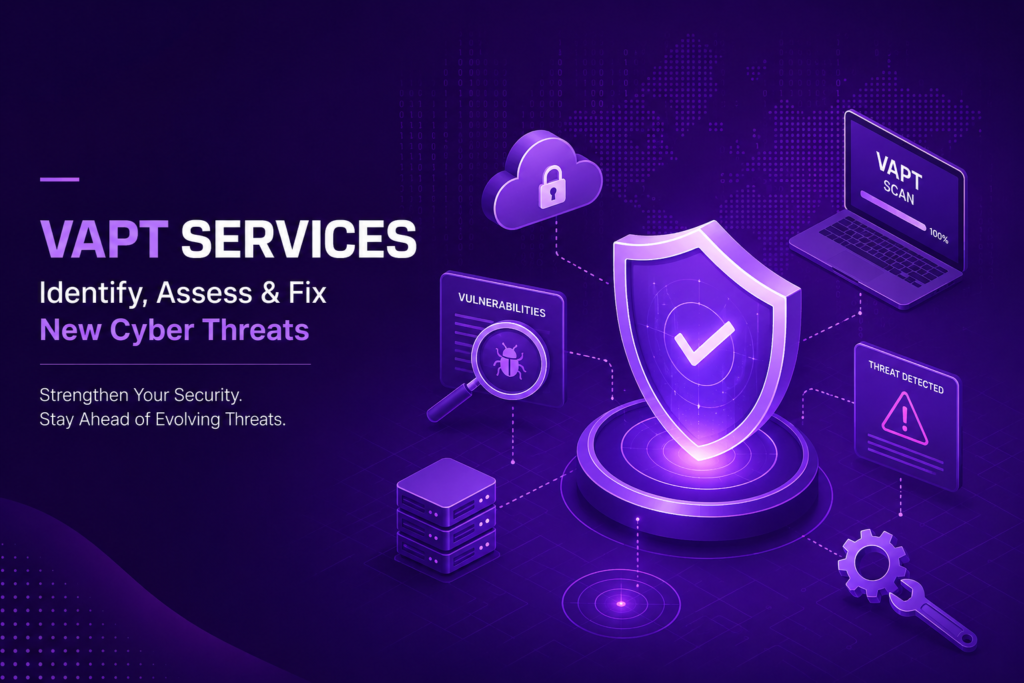
VAPT services identify, assess, and fix New cyber threats.

VAPT services identify, assess, and fix New cyber threats. When organizations invest in cybersecurity, VAPT Services are often among the first security initiatives considered. Whether driven by compliance obligations, customer requirements, cyber insurance expectations, or internal security objectives, enterprises increasingly recognize the importance of identifying vulnerabilities before attackers do. However, many organizations purchase VAPT Services without fully understanding what a quality assessment should deliver. The result is often a lengthy technical report filled with findings but limited guidance on actual business risk. The reality is that two VAPT providers can offer what appears to be the same service while producing dramatically different outcomes. One engagement may generate hundreds of vulnerabilities with little context, while another may provide deep visibility into exploitability, business impact, remediation priorities, and overall security posture. Understanding this distinction is critical because the objective of a VAPT engagement is not simply to generate findings. The goal is to help organizations understand where they are exposed, how attackers could exploit those weaknesses, and what actions should be prioritized to reduce risk. VAPT Services combine Vulnerability Assessment and Penetration Testing to identify, validate, and prioritize security weaknesses across applications, networks, cloud infrastructure, APIs, endpoints, and critical business systems. A mature VAPT engagement provides more than vulnerability reports. It delivers actionable insights that improve security posture, support compliance initiatives, reduce business risk, and strengthen organizational resilience against evolving cyber threats. Why VAPT Services Matter More Than Ever in 2026 Modern enterprises operate in increasingly complex digital environments. Cloud adoption, hybrid work models, SaaS applications, API-driven architectures, third-party integrations, and mobile applications have dramatically expanded the attack surface available to cybercriminals. Every new technology creates opportunities for innovation and growth. It also introduces additional security risks that organizations must actively manage. Threat actors are no longer focused exclusively on large multinational corporations. Small and mid-sized businesses are increasingly targeted because attackers recognize that security maturity often varies significantly across organizations. As digital transformation accelerates, organizations require greater visibility into their security posture than ever before. This is precisely where VAPT Services provide measurable value. Identify weaknesses before attackers discover them Validate the effectiveness of existing security controls Reduce the likelihood of successful cyberattacks Support regulatory and compliance requirements Improve risk management and governance programs Strengthen customer and stakeholder trust Provide leadership teams with actionable security intelligence Thought Leadership Insight One of the most common misconceptions in cybersecurity is that organizations experience breaches because they lack security tools. In reality, many incidents occur because existing weaknesses were never properly identified, validated, prioritized, or remediated. Organizations often possess the necessary controls but lack visibility into where their greatest risks actually exist. What Is VAPT Really Designed to Achieve? Many organizations mistakenly believe that VAPT Services exist solely to identify vulnerabilities. While vulnerability discovery is an important component of the process, it represents only one aspect of a comprehensive security assessment. A mature VAPT engagement helps organizations answer critical business and security questions that directly influence risk management decisions. What Security Weaknesses Exist? The first objective is identifying vulnerabilities, misconfigurations, insecure settings, outdated software, exposed services, and weak security controls that may increase organizational risk. Which Vulnerabilities Are Actually Exploitable? Not every vulnerability creates meaningful risk. Penetration testing validates whether identified weaknesses can realistically be exploited by an attacker under real-world conditions. Which Systems Create the Greatest Business Risk? A mature assessment evaluates business impact alongside technical severity. Systems containing sensitive customer data, financial information, intellectual property, or operational assets typically require higher prioritization. How Likely Is an Attacker to Succeed? VAPT Services help organizations understand attack feasibility, potential attack paths, privilege escalation opportunities, and weaknesses that could enable lateral movement across environments. Which Findings Require Immediate Remediation? Perhaps the most valuable outcome of a quality assessment is clear remediation prioritization. Security teams need guidance on which vulnerabilities should be addressed immediately and which can be managed through planned remediation cycles. These answers enable leadership teams, IT departments, risk managers, and security professionals to make informed decisions based on actual risk exposure rather than assumptions. What Most Organizations Overlook About VAPT Services One recurring challenge across industries is the assumption that automated vulnerability scanning alone provides sufficient visibility into organizational security risks. While automated scanners play an important role, they rarely provide complete insight into complex attack scenarios or business-specific security weaknesses. Automated tools typically struggle to identify: Business logic vulnerabilities Privilege escalation paths Authentication weaknesses Authorization bypass flaws Chained attack scenarios Complex application workflows Context-specific security misconfigurations Advanced exploitation techniques Expert Observation During enterprise assessments, organizations frequently focus on vulnerability counts rather than actual risk exposure. A report containing hundreds of low-risk findings may be far less important than a single critical vulnerability capable of exposing sensitive customer information or enabling unauthorized access to business-critical systems. What Enterprises Should Expect from a Quality VAPT Engagement Not all VAPT Services deliver the same level of value. While many providers advertise vulnerability assessments and penetration testing, the depth of testing, quality of reporting, level of manual validation, and business relevance of findings can vary significantly. A high-quality VAPT engagement should provide far more than a list of vulnerabilities. It should deliver meaningful visibility into security posture, business risk exposure, and practical remediation priorities. Organizations investing in cybersecurity assessments should understand the core components that separate a mature VAPT engagement from a basic vulnerability scanning exercise. Comprehensive Scoping Every successful assessment begins with proper scoping. Before testing starts, organizations and assessment teams should clearly define the assets, applications, infrastructure components, and environments included in the engagement. Without comprehensive scoping, critical attack surfaces may remain untested, creating a false sense of security. A mature scope typically includes: External-facing applications Internal business applications Corporate networks Cloud infrastructure Mobile applications APIs and integrations Authentication systems Remote access infrastructure Third-party connected systems Critical business assets Organizations should ensure that all environments containing sensitive customer information, financial records, employee data, or business-critical workloads are included within assessment boundaries. Vulnerability Identification The next phase involves identifying security weaknesses across the defined

VAPT services identify, assess, and fix New cyber threats. Read More »

Importance of Network Security

Importance of Network Security Why Assessments Prevent Cyber Attacks

Importance of Network Security Why Assessments Prevent Cyber Attacks INTRODUCTION In the era of digitization, cyber attacks are evolving at a rapid rate, and therefore network security evaluation is part of any business’s security policy. Network security cannot be overemphasized since it is a critical component in safeguarding sensitive data, preventing cyberattacks, and ensuring business continuity. Without a sound assessment of their network security, business firms expose themselves to possible vulnerabilities for the exploitation that results in financial losses, damage to their reputation, and litigation problems. With phishing, ransomware, and data breaches increasingly becoming more sophisticated cyber attacks, organizations must pay attention to network security audits in order to have a strong defense mechanism against potential attacks. An effective security strategy includes vulnerability scanning, risk assessment, penetration testing, and compliance testing. This comprehensive guide will discuss the importance of network security, the importance of frequent security audits, and best practices to harden an organization’s cybersecurity infrastructure. Realizing the Relevance of Network Security The relevance of network security is that it can shield digital resources from unauthorized access, cyber attacks, and data breaches. In today’s world when organizations are relying on cloud computing, IoT devices, and remote workers, a secure network becomes essential. Why Network Security is an Imperative Secures Sensitive Information – Prevents unauthorized access to sensitive information such as customer data, financial data, and intellectual property. Secures against Cyber Attacks – Prevents malware, ransomware, phishing, and DDoS attacks threats. Enables Compliance – Enables organizations to become compliant with regulations such as GDPR, HIPAA, and ISO 27001. Enhances Business Continuity – Minimizes downtime caused by cyber attacks and ensures business continuity. Builds Customer Trust – Provides a secure environment for customers, and thus customers become more trusting of the organization. Avoids Financial Losses – Cyberattacks can lead to humongous financial losses due to legal fines, data recovery expenses, and lost business. Boosts Competitive Advantage – Organizations that possess a secure infrastructure create a competitive advantage by assuring clients and partners regarding their data protection policies. Prevents Insider Threats – Prevents security breaches caused by employees, contractors, or business partners with access to sensitive information. Mitigates Third-Party Vulnerability Risks – Assists in ensuring that vendors, suppliers, and partners possess robust security practices to prevent indirect threats to the company. What is a Network Security Assessment? A network security audit is a thorough review of an organization’s information technology infrastructure for vulnerabilities identification, security control assessment, and recommending measures to mitigate risks. An audit ensures the security of an organization’s network against growing cyber attacks. Elements of a Network Security Audit A thorough network security audit consists of several important elements that help organizations enhance their security position: Asset Identification – Identification of all hardware, software, and devices in the network to have visibility into security risks. Vulnerability Scanning – Identification of security weaknesses in network devices, applications, and settings. Threat Analysis – Identification of external and internal threats that can impact network security. Penetration Testing – Simulation of cyberattacks to challenge security defenses and response. Compliance Review – Confirmation of industry standards such as PCI-DSS, SOC 2, and NIST guidelines. Incident Response Planning – Developing plans to identify, respond, and recover from cyber incidents. Types of Network Security Assessments Vulnerability Assessment – Identifies security vulnerabilities within network hardware and applications. Penetration Testing – Simulates real cyberattacks to challenge security defenses. Risk Assessment – Investigates possible security threats and business effect. Compliance Assessment – Ensures security controls meet regulatory requirements. Configuration Audit – Tests security settings on firewalls, routers, and other network gear for misconfigured settings. Impact of Network Security Evaluation in Mitigation of Cyber Attacks An evaluation of network security is significant in avoiding cyberattacks. Determination of the weaknesses and applying security beforehand reduces the chance of security vulnerabilities exponentially. How Network Security Evaluations Stop Cyber Attacks Identifying Security Gaps – Detects security loopholes in firewalls, servers, routers, and endpoints before hackers can exploit them. Improving Incident Response – Improves detection, response, and recovery of security incidents with a clearly defined process. Stopping Data Breaches – Mitigates risks associated with unauthorized access, data leakage, and insider threats. Minimization of Cost Losses and Downtime – Prevents expensive cyberattacks affecting business processes and causing loss of information. Keeping with Compliance Regulates – Installs the legislative and industry-supported security controls to prevent expensive penalties. Employee Training – Trains employees on best practice cybersecurity to eliminate the likelihood of human mistake resulting in a breach. Security Enhancements in Cloud – Scans cloud infrastructure so unauthorized usage, misconfigurations, and data breaches are removed. Safe Remote Employees and Mobiles – Imposes security controls on protecting remote employees and mobile phones against cyber attacks. Best Practices in Conducting Network Security Audit In order to leverage the importance of network security to its complete potential, organizations need to comply with best practices in conducting network security audits: Regular Security Audits – Conduct regular tests to find new threats. Penetration Testing – Conduct ethical hacking test cases to validate the security defenses. Multi-Factor Authentication (MFA) – Implement MFA to enhance access control and reduce unauthorized access risks. Employee Training – Educate employees on cybersecurity best practices to remove human error leading to security breach. Network Segmentation – Segregate core systems to prevent lateral movement in case of a breach. Zero Trust Security Model – Employ the Zero Trust model to establish rigorous access controls and prevent unapproved access. Real-Time Threat Monitoring – Employ security information and event management (SIEM) solutions to regularly monitor and detect threats in time. Patch Management – Regularly update and patch software, operating systems, and applications to plug security vulnerabilities. Endpoint Security Solutions – Employ robust antivirus, anti-malware, and endpoint protection software to secure connected devices. Incident Response Planning – Develop an incident response plan in order to manage and curtail cybersecurity threats successfully. Network Security in the Future Network security will top the agenda even as more and more sophisticated cyber attacks become frequent. Organizations shall be required to merge new technologies of security

Importance of Network Security Why Assessments Prevent Cyber Attacks Read More »

How to Choose Right Cybersecurity

How to Choose Right Cybersecurity Service for Your Business

How to Choose Right Cybersecurity Service for Your Business In today’s interconnected digital economy, cyber attacks continue to advance at an unprecedented pace. Consequently, businesses of all scales must proactively invest in appropriate safeguards to protect confidential data, adhere to regulatory compliance, and prevent catastrophic financial losses. However, with a vast array of vendors, tools, and configurations available, answering the fundamental question of how to choose the right cybersecurity service can quickly become puzzling. Selecting the wrong service can lead to critical gaps in security posture, while an overly complex implementation can create operational inefficiencies. This guide provides a comprehensive framework to assess your specific organizational risk profile, understand the varieties of security offerings, and ask the right questions to evaluate providers. The Business Imperative for Structured Cybersecurity Before analyzing vendor offerings, it is crucial to recognize why structured cybersecurity services are a strategic operational necessity: Mitigating Evolving Threats: Cybercriminals are leveraging automated scripting and AI to deploy targeted ransomware, business email compromise (BEC), and zero-day exploits. Securing Sensitive Data: Organizations store intellectual property, financial records, and employee/customer Personally Identifiable Information (PII) that must remain confidential. Ensuring Regulatory Compliance: Enterprises must comply with strict national and global laws, including the DPDP Act, GDPR, HIPAA, and PCI DSS. Maintaining Business Continuity: A security incident can bring systems offline for days, resulting in massive operational downtime and revenue loss. Preserving Brand Trust: Protecting user data directly correlates with client loyalty, whereas a public data breach can cause permanent reputational damage. 10 Types of Cybersecurity Services Explained Cybersecurity is not a monolithic product, but rather a combination of distinct disciplines. To make the correct procurement decisions, you should understand the primary services available: 1. Managed Security Services (MSS) Managed Security Service Providers (MSSPs) provide end-to-end management, monitoring, and administration of security devices and systems. This is ideal for organizations lacking the resources for an in-house security department. 2. Network Security Services Protects your company’s network boundaries from unauthorized access, intrusive code, and data exfiltration. Key components include Next-Generation Firewalls (NGFW), Virtual Private Networks (VPNs), and network monitoring tools. 3. Endpoint Security Services Secures end-user devices (workstations, smartphones, and servers) connecting to the company network. Typically involves Endpoint Detection and Response (EDR) solutions, device encryption, and mobile device management policies. 4. Cloud Security Services Specifically tailored to secure resources, data, and access controls hosted in public or hybrid cloud environments. Helps implement strict access controls and maintains secure configurations in AWS, Azure, or Google Cloud. 5. Penetration Testing (VAPT) Simulates real-world cyberattacks to uncover vulnerabilities in networks, web applications, and physical servers. Conducting regular Vulnerability Assessment and Penetration Testing (VAPT) helps identify hidden network vulnerabilities before malicious actors exploit them. 6. Security Awareness Training Addresses the human element of security. Provides continuous training and simulated phishing campaigns to educate employees on how to spot and report suspicious emails, credential harvesting attempts, and social engineering. 7. Incident Response & Forensics Provides emergency support during a security compromise to contain the attack, limit damages, investigate root causes via digital forensics, and clean systems to restore operations as quickly as possible. 8. Identity & Access Management (IAM) Manages user identities, privileges, and access permissions. Ensures that only authorized individuals can access specific data sets and systems, reducing the risk of insider threats and unauthorized access. 9. Data Loss Prevention (DLP) Implements software policies, network filters, and encryption rules to monitor and prevent sensitive data (such as credit card numbers or source code) from being leaked, shared, or stolen either accidentally or intentionally. 10. SOC as a Service Provides a remote Security Operations Center that monitors your systems 24/7. A dedicated Security Operations Center (SOC) provides continuous threat monitoring and response to detect and contain malicious activity in real time. Key Evaluation Criteria for Selecting a Cybersecurity Provider When deciding on how to make the right cybersecurity service decision, take the following critical factors into account: 1. Determine Your Specific Business Needs: Every industry has a distinct risk profile. Before selecting a vendor, it is essential to perform a comprehensive cybersecurity risk assessment to identify your critical assets, operational dependencies, and threat vulnerabilities. 2. Verify Technical Expertise & Certifications: Verify that the security engineering team has recognized industry certifications such as Certified Information Systems Security Professional (CISSP), Certified Ethical Hacker (CEH), and that the provider holds organizational certifications like ISO 27001. 3. Comprehensive End-to-End Coverage: Avoid coordinating with fragmented security vendors. Choose a provider that can handle threat intelligence, perimeter protection, endpoint monitoring, policy design, and compliance under a single unified partnership. 4. Round-the-Clock Monitoring: Cyber threats operate outside normal business hours. Make sure your provider provides true 24/7 monitoring, alert triage, and active incident response agreements with strict Service Level Agreements (SLAs). 5. Scalability: Ensure the security tools, cloud agents, and licensing models offered can grow alongside your organization as you expand endpoints, cloud servers, and personnel. 6. Specialized Compliance Alignment: Ensure the security provider is capable of aligning your infrastructure with standard regulations. Working with a provider that offers specialized compliance consulting services makes meeting frameworks like ISO 27001 or GDPR seamless. 7. Cost vs. Security Value: Do not choose the cheapest option simply to satisfy audit requirements. Evaluate the total value provided by avoiding potential business disruption, recovery costs, and regulatory fines. 8. Customer References and Track Record: Ask for verified case studies, industry references, and customer testimonials that demonstrate the vendor’s response times and performance during real incident scenarios. 9. Integration with Current Infrastructure: A good security service must integrate with your current IT systems and applications without causing structural disruptions, performance lag, or configuration conflicts. 10. Customization Flexibility: Reject rigid, one-size-fits-all packages. Choose a provider willing to customize threat monitoring parameters and response playbooks based on your unique workflows. Expert Observation: Many companies purchase expensive firewalls and endpoint security tools but fail to configure them correctly. The value of a professional cybersecurity service lies in the custom policy configuration, continuous tuning, and expert human analysis that filters out false positives and catches

How to Choose Right Cybersecurity Service for Your Business Read More »

New Penetration Testing

New Penetration Testing Why Every Business Needs It

New Penetration Testing Why Every Business Needs It INTRODUCTION In the rapidly increasing rate of cybersecurity attacks in today’s digital era, small, medium, and large enterprises alike are besieged by cyberattacks, data breaches, and unauthorized access. Most useful perhaps is the approach to protecting a company from such attacks using New Penetration Testing. This new type of ethical hacking assists companies in identifying vulnerabilities prior to being exploited by cyberattackers. In this comprehensive guide, we will discuss New Penetration Testing, why companies require it, how to conduct it, and how to implement it. If you are a startup founder or an enterprise manager, this blog will give you an insight into securing your digital property through the employment of New Penetration Testing. What is New Penetration Testing? Understanding the Concept New Penetration Testing is a next-generation security test approach where real-time cyberattacks are simulated by ethical hackers to identify vulnerabilities in the cyber infrastructure of an organization. New Penetration Testing is different from traditional penetration testing because it uses cutting-edge cybersecurity practices, AI-powered automation, and real-time threat intelligence. Major Reasons for New Penetration Testing Uncover Security Vulnerabilities – Identify exploitable vulnerabilities in applications, networks, and systems. Test Incident Response – Validate the response of security teams to attacks. Improve Cybersecurity Posture – Strengthen defenses by closing holes before they can be used against you. Ensure Regulatory Compliance – Comply with industry standards like GDPR, HIPAA, PCI DSS, and ISO 27001. Why Every Company Needs New Penetration Testing 1. Rising Cybersecurity Threats Cybercrime is increasingly a formidable threat for organizations worldwide. Hackers are getting cleverer with AI-fueled attacks, phishing, and ransomware to target organizations. New Penetration Testing leads the way by actively finding and preventing threats. 2. Compliancy in Cybersecurity There are numerous industries, such as finance, health, and e-commerce, which are stringently regulated by cybersecurity needs. New Penetration Testing is regulation compliant, evading costly fines and lawsuits. 3. Sensitive Information Protection Firms carry enormous volumes of sensitive data, such as customer information, accounting information, and trade secrets. Compromise of information via security breach leads to loss of money, reputation crisis, and legal accountability. New Penetration Testing protects sensitive data against cybercrime. 4. Incident Response Readiness Enhancement Cybersecurity good practice is good incident response planning. New Penetration Testing enables organizations to ensure their response plans are functioning, such as the ability to detect and mitigate early on cyber threats, and rapidly find, contain, and recover from cyber attacks. 5. Cost-Effective Cybersecurity Investment It is far cheaper to prevent a cyberattack than to clean up after one. New Penetration Testing finds problems in their earliest stages so companies can seal security gaps before they become the cause of economic loss or downtime. 6. Customer Trust and Company Reputation Building Businesses must safeguard their customers’ data. Failure in security can destroy customers’ trust and a company’s reputation. New Penetration Testing provides a strong security stance, helping businesses uphold customers’ trust and credibility. 7. Minimizing Downtime and Disruption of Business Cyber attacks have the potential to completely disrupt business functions, and hence creating immense downtime. An attack of ransomware or data breach – anything like this has dire results. New Penetration Testing sidesteps downtime by uncovering and repairing vulnerabilities in security quite ahead of when it even creates any kind of issue. How New Penetration Testing Operates 1. Planning and Reconnaissance The initial step of New Penetration Testing is information gathering on the target system. IT security experts make an evaluation of the organization’s online presence, determining probable sources of cyber attacks. 2. Scanning and Enumeration Automated scanners and manual techniques are employed in this step for scanning systems, applications, and networks to determine vulnerabilities. Insecure settings, old software, and probable security vulnerabilities are determined here. 3. Simulation of Exploitation and Attack Ethical hackers try to exploit the vulnerabilities found by applying actual attack methodologies in the real world. This stage determines how easy a hacker can gain unauthorized access, steal data, or shut down business operations. 4. Post-Exploitation Analysis After exploiting the vulnerabilities, security analysts study the effect of the attack. They determine how deep an attack can be and identify other security vulnerabilities. 5. Remediation and Reporting An exhaustive report is generated, noting identified vulnerabilities, vulnerabilities exploited, and suggested remedies. Organizations make use of such a report for remediating security vulnerabilities as well as in increasing their overall cybersecurity posture. Best Practices for New Penetration Testing Implementation 1. Select the correct Penetration Testing team Select experienced information security professionals with New Penetration Testing experience. They should be certified like CEH (Certified Ethical Hacker), OSCP (Offensive Security Certified Professional), and CISSP (Certified Information Systems Security Professional). 2. Regular Testing Cyber threats continuously evolve, and thus New Penetration Testing must be conducted by organizations on a regular basis. Quarterly or at least every two years. Stay ahead of emerging threats by regularly testing. 3. Critical Business Assets Try high-risk applications like customer databases, finance apps, and bespoke programs first. Determine which assets hold the greatest worth so successful penetration testing plans may be devised. 4. Manual and Automated Testing Where automated tools are quicker vulnerability scanning, manual hacking by experienced hackers finds deeper security loopholes. Coupled, they give complete security. 5. Remedy Vulnerabilities and Re-test After vulnerabilities have been discovered, corporations must apply security patches and patches. New Penetration Testing must be re-run after vulnerabilities have been patched to ensure that security vulnerabilities are completely removed. New Trends in New Penetration Testing 1. AI and Machine Learning in Penetration Testing Artificial Intelligence (AI) is revolutionizing New Penetration Testing by enabling the automation of vulnerability scanners, handling big data sets, and the emulation of real-time cyber attacks. 2. Cloud Penetration Testing With an increasing number of businesses moving to the cloud, New Penetration Testing aims at the vulnerability of cloud infrastructure for secure data storage and access controls. 3. IoT and OT Security Testing Internet of Things (IoT) and Operational Technology (OT) expansion raises cybersecurity risk. New Penetration Testing assesses the security of networked

New Penetration Testing Why Every Business Needs It Read More »

Strong Passwords

Strong Passwords & Password Managers Why You Need Them

Strong Passwords & Password Managers Why You Need Them INTRODUCTION As the age of technology rises, it’s never been so crucial to guard online accounts. As the prevalence of cyberattacks increases, well-protected passwords are the means of protection for keeping trespassers out of a person’s world of bytes and bits. Passwords that are weak or being reused render the process more susceptible to hackers just taking their pound of flesh without much difficulty. Strong passwords and password managers consequently become instrumental as far as maintaining effective protection for the web goes. This article will outline the importance of having good passwords, how they are created, the risks involved with weak passwords, the benefits of using a password manager, and other safety features to increase protection even further. The Importance of Strong Passwords A good password is a protective shield against cybercriminals trying to access business and personal accounts. With an increase in data breaches and hacking incidents, the use of good passwords can significantly reduce the risk of illegal entry. Characteristics of a Good Password A good password should have the following characteristics: Minimum of 12-16 characters long Mix of uppercase and lowercase letters Has numbers and special characters Does not employ typical words or readily guessable patterns (e.g., “password123” or “admin”)   Unique to each account Does not include personal information like names or birthdays Strong passwords make it difficult for attackers to crack them with brute force or dictionary attacks. Weak Password Risks Weak passwords pose serious security risks, including: Increased risk of brute-force attacks Increased risk of credential stuffing if the password is reused Compromise in data breaches, exposing personal data to risk Phishing attacks to utilize easily guessed passwords Malware infections sniffing weak passwords that are not securely stored Using strong passwords puts these risks off the table from the very start, and so enhances security tremendously. Why You Should Never Reuse Passwords Password reuse is an easy bad practice that highly puts data breaches at risk. Sharing a single password for several applications means that compromising one site breaches several accounts. That is the reason why, in order for passwords to be strong, each account must use a different one. For example, when a login credential is stolen by a hacker from a compromised social network account and the same password is used for banking or email accounts, the intruder gains unauthorized access to several websites. Real-Life Incidents of Password Break-In There have been several high-profile data breaches due to weak or identical passwords. Some such high-profile incidents are: Yahoo Data Breach (2013-2014): Over 3 billion accounts impacted due to weak security measures. LinkedIn Hack (2012): 165 million passwords stolen and used to perform mass account takeovers. Facebook User Data Leak (2019): 540 million plaintext records leaked, putting users at risk of harm. These attacks highlight the importance of having strong passwords and frequently changing them. The Role of Password Managers in Having Strong Passwords Since it is challenging to come up with and remember strong passwords for multiple accounts, password managers simplify this by keeping login credentials safe and auto-filling them. Benefits of a Password Manager Generates and saves secure passwords: Password managers create secure, security-compliant passwords. Eliminates password duplication: Password duplication is eliminated using weak, similar passwords. Encrypted storage: Password managers save passwords in an encrypted vault. Autofill feature: Reduces the risk of keyloggers capturing passwords. Multi-device support: Facilitates access to stored credentials on multiple devices. Compromised password notifications: Some password managers notify users if their passwords have been compromised in a breach. Backup and recovery options: Allows users to recover lost or forgotten passwords securely. Secure password sharing: Some password managers provide secure sharing of passwords with trusted contacts. Effective password management software like 1Password, LastPass, Dashlane, and Bitwarden offers robust security features that allow users to effectively use strong passwords. Best Practices for Strong Password Creation and Management For additional security, use the following best practices in creating and managing strong passwords: Use a passphrase method: Use random words or a sentence to generate a complex but easy-to-remember password. Allow two-factor authentication (2FA): The addition of another layer of protection makes the account more secure from unauthorized users. Update passwords: Update strong passwords from time to time, particularly for key accounts. Steer clear of phishing attacks: Never give away passwords through an email or a questionable source. Secure your master password: In the case of using a password manager, set the master password really secure. Use biometric authentication: Face recognition or fingerprint verification can give another layer of protection. Don’t store passwords in browsers: Storage of passwords in browsers is dangerous to cyber-attacks. Monitor for security breaches: Use sites such as Have I Been Pwned to check if your credentials are breached. Enable login attempt notifications: Some websites provide notifications on failed login attempts, so the user can feel unauthorized access. Use different passwords for bank accounts: All finance and banking accounts should be assigned strong and very different passwords to prevent fraudulent transactions. Additional Security Features to Strengthen Protection Online Multi-Factor Authentication (MFA) MFA requires users to provide two or more verification factors, such as a password and a fingerprint or an app code, for authentication. This reduces unauthorized access significantly even if a password is compromised. Using Hardware Security Keys Hardware authentication keys such as YubiKey provide physical verification to access accounts, making it very hard for attackers to access without the key. Implementing Account Lockouts Most applications come with account lockout capabilities that temporarily lock out accounts on repeated unsuccessful login attempts to prevent brute-force attacks. Not Using Public Wi-Fi to Log In Logging in with public Wi-Fi networks exposes credentials to MITM attacks. Never log in via a VPN when accessing private information on public networks. Learning About Cybersecurity Threats Knowledge of existing cyber threats and security practices educates users about the potential risks and allows them to respond accordingly to protect their accounts. Conclusion Since cyber threats are constantly evolving, the application of secure passwords

Strong Passwords & Password Managers Why You Need Them Read More »

Cybersecurity Risks of Augmented

Cybersecurity Risks of Augmented Reality Technology Know It All

Cybersecurity Risks of Augmented Reality Technology Know It All INTRODUCTION Augmented Reality (AR) technology has revolutionized sectors ranging from gaming to medicine, education, and manufacturing. Although AR provides interactive and engaging experiences, it also poses an array of cybersecurity risks. Within this comprehensive guide, we’ll examine the augmented reality cybersecurity risks, their implications on users, businesses, and security systems. As the applications of AR expand, it’s crucial to recognize these risks in order to protect sensitive data, user privacy, and digital infrastructures. What is Augmented Reality (AR)? Augmented Reality (AR) is an advanced technology that overlays digital information—images, sounds, and text—on the real world. Unlike Virtual Reality (VR), which puts users within a completely digital environment, AR enhances the real world by overlaying interactive digital elements. AR has applications in numerous fields: Gaming (e.g., Pokémon GO, immersive multiplayer games) Retail (virtual try-ons, in-store AR experiences) Healthcare (AR-assisted surgeries, diagnostics, medical training) Education (real-time interactive learning experiences, live translations) Manufacturing (real-time worker instructions, remote work tools) Military and Defense (combat training simulations, real-time battlefield analysis) Marketing and Advertising (interactive billboards, AR-based advertising) The Emerging Cybersecurity Risks of Augmented Reality With AR apps relying more and more on everyday activities, their vulnerabilities are a significant drawback. These are the primary augmented reality cybersecurity threats: 1. Data privacy and unauthorized access AR apps collect vast amounts of data, including: Location data (GPS location tracking, movement patterns) Personal preferences (shopping habits, holiday interests) Biometric information (voice recognition, facial features) Behavioral patterns (eye-tracking, interaction levels) Hackers can steal confidential user data through vulnerabilities in AR systems. Unsecured access to AR platforms can lead to identity theft, corporate espionage, and data theft. Example: If an AR-powered healthcare application is hacked, cybercriminals can gain access to confidential medical information, which can lead to severe privacy violations. 2. Denial of Service Attacks Another of the most important cybersecurity risks of augmented reality is greater malware and ransomware attacks on AR devices. Cyber attackers can: Hide malicious code inside AR apps Ransom AR capabilities by locking them until money is paid Employ AR headsets as beachheads to broader network incursions Example: A hacker could breach an AR business training application and charge money to restore access, causing large interruptions. 3. Spoofing and Man-in-the-Middle Attacks Attackers are able to intercept and modify AR data in real time. For example: Attackers can manipulate navigation instructions on AR maps to mislead users. AR overlay spoofing is able to mislead users into revealing sensitive information. Financial fraud is feasible if AR shopping apps are compromised. Scenario: If AR-enabled banking where an attacker tampers with your transaction details and initiates unauthorized payments. 4. AR Device Vulnerabilities in the IoT AR devices are extremely reliant on the Internet of Things (IoT), and due to this, they are vulnerable to attacks. Cyber attackers can: Exploit weak IoT security to gain control of AR headsets Use AR-enabled IoT devices to penetrate business networks Seize control of AR smart glasses to eavesdrop on conversations and gain intelligence Example: AR smart homes can be hacked, allowing hackers to gain control over connected security cameras or smart locks. 5. Deepfake and Social Engineering Attacks As AR keeps developing at a rapid pace, deepfake features are being integrated into augmented experiences. Threat actors can use: Deepfake avatars to impersonate others Manipulated AR calls to conduct fraud in real time A cyberattacker can utilize AR deepfake video conferencing to impersonate an executive and authorize fictitious transactions. 6. Physical Safety Threats Triggered by AR Cyber Attacks Compromised AR systems can deceive users’ perception and result in accidents in the physical world. Some of the potential threats are: Impersonal AR traffic signs or AR navigation hacks causing traffic accidents Hacked AR-assisted factory tools leading to machine failure Malicious AR overlays that take leading users into unsafe zones Example: AR navigation apps can be hacked to lead drivers into harm or on a collision course. 7. Security Issues in Augmented Reality Clouds AR applications tend to rely on cloud computing to host and process information. Although cloud-based AR experiences offer many advantages, they also have security issues like: Misconfigured cloud storage leading to data breaches Denial-of-Service (DoS) attacks on AR application availability Unauthorized access to AR user data stored in the cloud Example: A hacker exploiting vulnerabilities in an AR cloud platform might gain access and alter sensitive business blueprints that are being shared for remote collaboration. 8. Insider Threats in AR Environments Insider threats, both malicious and inadvertent, are a significant security risk in AR applications. AR systems can be accessed by employees or malicious insiders who have the capability to: Leak confidential AR design information Utilize compromised AR devices to inject vulnerabilities Manipulate AR-based corporate training or simulations for fraudulent intent Example: An unhappy employee in an AR-based industrial training program can manipulate safety procedures, leading to unsafe working conditions. 9. Blockchain Security Solutions for AR To obtain AR, the integration of blockchain technology can help by: Ensuring data integrity through immutable transactions Securing identity verification through decentralized authentication Avoiding AR-based digital asset forgery Example: AR-enabled NFTs (non-fungible tokens) can utilize blockchain for secure verification, preventing digital asset forgery. Securing Against Augmented Reality Cybersecurity Threats Preventing the cybersecurity threats of augmented reality requires preventive measures. The following is how users and organizations can make it secure: 1. Adopt Strong Authentication Practices Implement multi-factor authentication (MFA) in AR applications Switch on biometric authentication for secure access Encrypted login must be maintained in all AR system-related systems 2. Lock Down AR Hardware with Regular Patches Upgrade AR software and firmware with security patches to repel vulnerabilities Download security updates from trusted channels Regularly audit AR programs for security compatibility 3. Encrypt AR communications and data Implement end-to-end encryption across all AR data transmission Make cloud storage in which AR data is processed more secure Use secure VPN connections for AR interactions 4. Establish Industry Standards and Regulations Implement global AR security standards Encourage collaboration between AR developers and cybersecurity experts Establish government policies for

Cybersecurity Risks of Augmented Reality Technology Know It All Read More »

New Guardians of the

New Guardians of the Web: Ethical Hackers in Cybersecurity

New Guardians of the Web: Ethical Hackers in Cybersecurity INTRODUCTION In the age of cyberspace, when there is a likelihood of cyber attacks looming large over everything, the New Guardians of the Web have emerged as protectors from evil incursions. The protectors of networks, computers, and confidential information are ethical hackers or white-hat hackers. On a scale never seen before, at a time when cybercrime has scaled new levels, the need for ethical hackers is higher than ever before. In this blog, we discuss the role, importance, and future of these New Guardians of the Web in the constantly changing world of cybersecurity. Learning Ethical Hacking Ethical hacking is an aggressive method of cybersecurity, where professionals find loopholes in systems ahead of evil hackers. These New Guardians of the Web apply their skills to protect organizations from cyber attacks, and they are invaluable assets in today’s digital world. Major Duties of Ethical Hackers Penetration Testing – Simulation of cyber-attacks to detect and correct loopholes. Network Security Audits – Scanning of security controls against unauthorized intrusions. Incident Response – Fast response to security breaches to mitigate damage. Cyber Threat Intelligence – Detection of new threats to provide pre-emptive security for systems. Security Awareness Training – Training firms on best practices to avoid cyber attacks. Bug Bounty Programs – Involving programs whereby firms provide funds to compensate ethical hackers to identify security bugs. Reverse Engineering Malware – Reverse engineering malware to learn how to defend against it. Building Security Tools – Creating sophisticated security tools to defend against future cyber attacks. Why Ethical Hackers Are the New Protectors of the Web With increasing cybercrime, organizations need skilled professionals to counter emerging threats. Ethical hackers are the first line of defense, safeguarding sensitive information. As they understand how to think like bad hackers, they can anticipate and eliminate threats before they can do any harm.[/caption] The Growing Need for Ethical Hackers Increase in Cyber Attacks: Businesses experience data breaches, phishing attacks, and ransomware attacks on a daily basis. Regulatory Compliance: Governments implement stringent cybersecurity rules, and compliance is to be ensured by experts. Technological Advancement: New security threats come with the arrival of AI, IoT, and cloud computing. Lack of Cybersecurity Experts: There are immense requirements but very little supply for ethical hackers, thereby making their vocation extremely lucrative. Rising Cost of Data Breaches: There are millions of dollars lost through cyber-attacks by companies, so there has to be stronger security. Skills to Become a New Guardian of the Web There is a certain skill set required for ethical hacking, with technical knowledge along with an in-depth knowledge of cyber threats. The fundamental skills are: Programming Skills: Familiarity with languages such as Python, Java, and C++. Networking Skills: Familiarity with firewalls, VPNs, and network protocols. Operating System Skills: Familiarity with Linux, Windows, and macOS security. Cryptography: Familiarity with encryption and data protection techniques. Problem-Solving Skills: The ability to think fast to detect and fix security flaws. Reverse Engineering Skill: Capable of reverse engineering malware and software flaws. Cloud Security Skills: Capable of securing cloud infrastructure. AI & Machine Learning Knowledge: Utilization of AI for cyber security. Certifications Certifications are essential to become a globally recognized ethical hacker. A few of the most valued credentials are: Certified Ethical Hacker (CEH) – Provided by EC-Council. Offensive Security Certified Professional (OSCP) – Held in highest regard for penetration testing. Certified Information Systems Security Professional (CISSP) – Deals with broad security issues. GIAC Penetration Tester (GPEN) – Complicated penetration testing technique involved. CompTIA Security+ – General entry level certification dealing with basic security principles. Certified Cloud Security Professional (CCSP) – Specialized to protect cloud infrastructures. The Ethical Hacking Process There is a step-by-step process adopted by ethical hackers in performing security audits comprehensively. The process includes: Reconnaissance: Information gathering on the target system. Scanning: Identifying open ports and vulnerabilities. Gaining Access: Exploiting vulnerabilities to mimic security testing. Maintaining Access: Pinging the existence of security loopholes. Covering Tracks: Making sure that the activity of ethical hacking remains undetected. Reporting & Fixing Vulnerabilities: Recording security weaknesses and applying solutions. Industries That Rely on Ethical Hackers Ethical hackers, or the New Guardians of the Web, are sought after by various industries: Finance & Banking: Stopping financial fraud and protecting online transactions. Healthcare: Safeguarding sensitive patient information from cyber attackers. E-commerce: Safe online shopping experiences. Government & Defense: Safeguarding national security data. Technology & Software Companies: Protecting proprietary information and intellectual property. Education Sector: Safeguarding students’ records and academic data from cyber attacks. Social Media Sites: Ensuring the privacy of user information and avoiding privacy breaches. The Future of Ethical Hacking Technology continues to advance, and so do cyber threats. Ethical hackers will remain imperative in protecting digital assets. New trends in ethical hacking are: Artificial Intelligence in Cybersecurity: Ethical hacking tools with AI to enable automated threat detection. Blockchain Security: Increasing transparency and security for transactions online. Cloud Security: Protecting cloud-based systems against cyber attacks. IoT Security: Protecting smart devices from vulnerabilities. Bug Bounty Programs: Incentivizing ethical hackers to find and report security flaws. Quantum Computing: Getting ready for the next wave of encryption attacks. Cybersecurity Automation: AI-driven automation solutions for quick response to cyber threats. Zero Trust Architecture: A security model that presumes no system or user is trusted by default, and there is a need for continuous authentication and verification. Challenges Faced by Ethical Hackers Although they are valuable, ethical hackers are confronted by a multitude of challenges, some of which are as follows: Legal and Ethical Challenges: Complying with cybersecurity regulations. Emerging Threats: Staying informed about the latest hacking methods. Ignorance: Businesses’ failure to grasp the value of ethical hacking. Misconceptions Regarding Ethical Hacking: White-hat and black-hat hackers are often confused among them. Intense Pressure & Stress: Perpetual struggle against sophisticated cybercriminals. How to Get Started as an Ethical Hacker To become an ethical hacker, one needs to be dedicated, learn, and gain hands-on experience. Here are the steps to begin your career: Gain Technical Skills:

New Guardians of the Web: Ethical Hackers in Cybersecurity Read More »